Which information is needed to select a labeler?
Provide the bottle drawing and samples, label material and dimensions, application position, target rate, format range and expected changeovers.
End-of-line integration
A filled bottle becomes a finished saleable pack only after the end-of-line systems identify, decorate, group and handle it reliably.
Direct answer
A bottled-water end-of-line system may include bottle drying, inspection, labeling, date or batch coding, conveying, buffering, shrink or case packing and finished-pack handling. The final selection depends on bottle stability, label material, code requirements, pack pattern and the rate that must be sustained after filling.
System focus 01
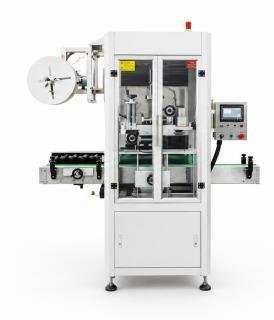
Sleeve, adhesive and roll-fed label systems suit different bottle shapes, materials and outputs. Label drawings and samples should be reviewed before the machine is finalized.
System focus 02
The code technology depends on the marking content, line speed, substrate and destination-market requirement. The quotation should identify the printer, interface and inspection boundary.
System focus 03
A packer is rated against a specific grouping pattern. Bottle count, film or carton, tray style and changeover needs should be confirmed with the line output.
End-of-line decision matrix
Select each end-of-line system from physical samples, drawings, code content and pack patterns.
| Decision | Project inputs | Interface risk |
|---|---|---|
| Bottle condition | Shape, surface, moisture, stability and discharge rate | Poor drying or unstable transfer affects decoration and packing. |
| Label route | Label type, material, dimensions, position and formats | Application speed and change parts vary by bottle/label pair. |
| Code and verification | Message, substrate, location, data source and reject rule | Unreadable or unverified codes break traceability. |
| Secondary pack | Bottle count, pattern, film/tray/carton and discharge | Packs per minute must support the same bottle-rate basis. |
| Finished-pack handover | Conveyor, manual takeoff or pallet interface | A blocked discharge can stop the complete line. |
Buyer questions
Use these answers as a project-planning starting point. Final equipment and performance remain subject to the confirmed brief.
Provide the bottle drawing and samples, label material and dimensions, application position, target rate, format range and expected changeovers.
Convert the required bottle flow into the selected bottles-per-pack pattern, then review the packer cycle, changeovers, upstream buffering and finished-pack discharge.
Confirm the required message, printing surface, substrate, line speed, data interface, inspection boundary and consumables before selecting the coding technology.
Deep technical guides
Each guide answers one narrower project question and links the result back to complete-line scope.
A visible date or lot mark supports traceability only when its content, source, readability and link to controlled production records are defined.
Palletizing capacity is meaningful only when the approved pack, layer pattern, pallet flow and warehouse handover are defined together.
A sleeve labeling result depends on the bottle, printed film, application machine, shrink-energy profile and upstream bottle condition, so these elements must be qualified together.
A hot-melt OPP labeler combines web handling, registered cutting, bottle control and adhesive application, so label quality depends on all four functions and their interfaces.
A shrink wrapper must control the bottle group, film path, seal and heat process while handing a stable pack to conveyors, accumulation and pallet handling.
Carton packing performance depends on the filled bottle, approved board and case geometry, forming and loading sequence, closing method and the downstream pallet route.
Wrinkles, skew, rotation, vertical shift, bubbles and poor seams can be caused by the label itself, bottle shape or moisture, web handling, sensors, adhesive, shrink conditions, conveyor control or interactions among them.
A bottle dryer prepares sealed bottles for reliable labels, codes and inspection by removing surface water at the relevant zones. Air-knife position, bottle rotation, line speed, air condition and package geometry must match the downstream material.
A self-adhesive labeler must control bottle presentation, web handling, dispense timing, wipe-down and inspection for the approved label construction. Selection should consider decoration quality, format range, material storage and lifecycle consumables.
Wraparound cases and shrink packs create different material, protection, handling and retail outcomes. Selection should follow bottle stability, pack patterns, pallet duty, route hazards, material supply and required presentation rather than one machine speed.
Capacities, process routes, layouts, utilities and equipment shown on this site are decision frameworks and reference examples. They are not a final specification, performance guarantee or offer. Confirmed scope and performance are defined in the signed technical and commercial agreement.
Allot Tech project desk
Share the source water, bottle, target output, pack format, factory status and destination. We will use them as the basis for a project-specific configuration discussion.