Specify sleeve application and shrinking as one process
Sleeve Labeling Machine for Water Bottles
A sleeve labeling result depends on the bottle, printed film, application machine, shrink-energy profile and upstream bottle condition, so these elements must be qualified together.
How should a sleeve labeling machine for water bottles be specified?
Provide controlled bottle drawings and samples, the sleeve artwork position, film construction, layflat width, cut length, shrink behavior, print mark and roll specification for every format. State whether bottles arrive wet, cold, warm, pressurized or unstable and define the required label orientation and finished appearance. Ask the supplier to separate the applicator, shrink tunnel, utilities, extraction, drying, inspection and reject scopes. Acceptance should use approved bottles and production-representative printed material across start, stop, speed change, splice or roll change and format change. A nominal labeling speed does not demonstrate registration or shrink quality under unconfirmed material and utility conditions.
System focus 01
Control the bottle and sleeve specification as a matched set
Sleeve performance changes with bottle diameter transitions, ribs, shoulders, grip panels, base geometry and wall stiffness. Build a format record using released drawings and actual samples, then pair it with the corresponding film construction and approved artwork. The label record should state sleeve type, layflat width, cut length, thickness basis, seam orientation, print repeat, eye mark and intended vertical and rotational position. Suppliers should identify uncertainty or trial requirements rather than assuming that similar-looking containers behave identically. A controlled bottle-film matrix also prevents later material substitutions from being mistaken for machine faults.
Released bottle drawing, sample and dimensional tolerance context
Sleeve material construction, layflat width and cut length
Print repeat, registration mark, seam and artwork position
Approved bottle-film pair and change-control responsibility
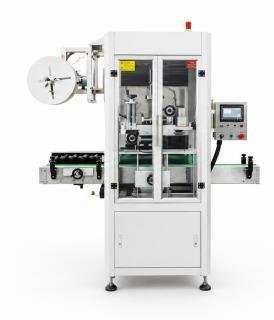
Reference equipment image. The final equipment selection, configuration and safeguards depend on the confirmed project brief.
System focus 02
Stabilize the container before cutting and applying the sleeve
Water bottles may leave the filler with surface moisture, variable temperature or low sidewall stiffness. Define the actual infeed condition and whether air knives, drying or conditioning are required before labeling. The conveyor, bottle spacing and guides must hold the container without distorting it while the film is opened, measured, cut and dropped. If artwork needs rotational orientation, the bottle feature and orientation method must be stated. Control logic should manage missing bottles, double feeds, low film, print-mark loss and downstream blocking without producing uncontrolled partial sleeves or a pile of stopped containers in the applicator.
Bottle surface moisture, temperature and pressure condition
Infeed spacing, stability, guides and conveyor responsibility
Sleeve opening, feed, cut and placement control method
Bottle-present, film-mark, low-roll and jam responses
System focus 03
Engineer the shrink process and its factory utilities
The shrink stage must develop the intended finished profile without unacceptable bottle distortion, label movement, wrinkles or damage to printed areas. The selected concept may use steam, heated air or another supplier-defined method; each creates different power, water, steam-quality, drainage, extraction, ventilation and safety interfaces. Ask for the test conditions used with the proposed bottle and film, the adjustable zones or exposure controls, and the treatment of condensate where relevant. The factory layout must include tunnel access, exhaust routing and downstream bottle condition, because a label is not finished merely when it leaves the applicator.
Shrink method and verified bottle-film test condition
Temperature or energy zones and exposure adjustment range
Steam, power, water, drain, extraction and ventilation loads
Bottle cooling, drying and downstream handover after shrinking
System focus 04
Define print, inspection and reject interfaces explicitly
If date or lot coding is applied to the sleeve, specify the code content source, print location, trigger, line-speed interface and consumable responsibility. Inspection may check presence, position, artwork identity, code readability or another configured characteristic, but each function needs stated capability and sample challenges. Decide whether a fault stops the machine, rejects a bottle or holds a defined production window. Rejection requires tracking and confirmation at the actual conveyor conditions. The final quality plan should separate automated checks from operator sampling and should not infer full package conformity from one camera view.
Coder type, data source, trigger and approved print location
Configured inspection characteristics and known limitations
Reject device, tracking distance and confirmation signal
Challenge samples, manual checks and affected-product response
System focus 05
Use production materials for changeover and acceptance
Request a format matrix showing recipes, mandrels, cutters, guides, bottle parts and shrink settings. Clarify tool use, adjustment references and how film is threaded or changed safely. Cleaning and maintenance access should cover the film path, cutter, sensors, belts, shrink zone, extraction and condensate areas. For acceptance, pre-approve sufficient bottles and printed sleeve rolls, including the reel core and winding direction intended for production. Observe steady operation and normal disturbances, record label placement and finished defects against an agreed sampling plan, and retain representative results. Repeat critical checks after site utilities and ventilation are connected.
Format recipe, change parts, threading route and reference settings
Cutter, sensor, belt, tunnel and extraction maintenance access
Approved production-representative bottle and sleeve quantities
Recorded run, disturbance, quality and changeover evidence
Sleeve-label qualification path
Qualify the package before accepting the machine setting
Follow the sequence from controlled inputs to installed evidence; skipping a step transfers uncertainty into production.
1. Release the bottle record
Confirm drawings, approved samples, physical condition, orientation features and surfaces that must remain unmarked.
2. Release the sleeve record
Control construction, dimensions, print repeat, mark, seam, core, winding direction and artwork position.
Record the energy method, zones, utilities, exposure controls and finished bottle-film observations.
5. Challenge quality controls
Test selected faults, inspection capability, reject or hold response and manual sampling records.
6. Repeat after installation
Verify critical settings with site utilities, extraction, conveyors and production materials before handover.
Finished appearance and registration are package-specific outcomes; the accepted bottle, film, artwork and operating conditions must remain part of the test record.
Buyer questions
Frequently asked questions
Use these answers as a project-planning starting point. Final equipment and performance remain subject to the confirmed brief.
Can one sleeve film specification work on every bottle shape?
Not automatically. Bottle profile, dimensions, stiffness, artwork location and the amount and direction of film shrink affect the result. Qualify each bottle-film pair and control later changes to either component.
Is a shrink tunnel always included with a sleeve applicator?
Scope varies. The inquiry should explicitly list the applicator, tunnel, steam generator or heating equipment where relevant, extraction, condensate handling, conveyors, drying, controls, coder, inspection and installation boundaries.
Why does bottle moisture matter before sleeve labeling?
Surface water can affect friction, bottle handling, film placement, code quality and the shrink environment. Provide the actual filler-discharge condition so the supplier can assess drying, guides and process settings.
What samples are needed for a sleeve-labeling test?
Use approved bottles and production-representative printed sleeve material with the intended roll core, winding direction, mark and splice condition. Agree quantities, formats, acceptance characteristics and who supplies materials before the test.
Continue planning
Related production-line decisions
Move to the technical decision that depends on the information covered on this page.
Evaluate container coverage, material path, utilities and finished-label criteria.
Project-specific confirmation
Capacities, process routes, layouts, utilities and equipment shown on this site are decision frameworks and reference examples. They are not a final specification, performance guarantee or offer. Confirmed scope and performance are defined in the signed technical and commercial agreement.
Allot Tech project desk
Turn your requirements into a comparable line brief.
Share the source water, bottle, target output, pack format, factory status and destination. We will use them as the basis for a project-specific configuration discussion.