Sidel palletizing equipment overview
Manufacturer reference used to frame complete-cell functions and product-flow interfaces; it does not select a system for this project.
Design the end-of-line cell around the real logistics unit
Palletizing capacity is meaningful only when the approved pack, layer pattern, pallet flow and warehouse handover are defined together.
Direct answer
Define the exact handled unit first: loose large bottles, shrink bundles, trays, cartons or another pack, with dimensions, mass, stability and approved orientation. Provide pallet and divider drawings, layer patterns, required line output, accumulation strategy, forklift or warehouse interface and available space. The supplier should return a complete cell scope covering infeed, pattern formation, gripper or layer handling, empty-pallet supply, divider handling, full-pallet discharge, guarding, controls and recovery. Acceptance should use representative products and packaging through normal running, stops, replenishment, incomplete layers and approved format changes. Robot payload or maximum cycles alone do not establish usable cell capacity.
System focus 01
Issue drawings and samples for every bottle or finished pack that reaches the cell. Record dimensions, mass, center of gravity, surface condition, compression limits and permitted orientation. Define pallet dimensions, entry direction, quality, maximum stack condition and any divider or slip-sheet detail. Layer drawings should identify count, rotation, overhang and stability assumptions so different suppliers quote the same physical task.
System focus 02
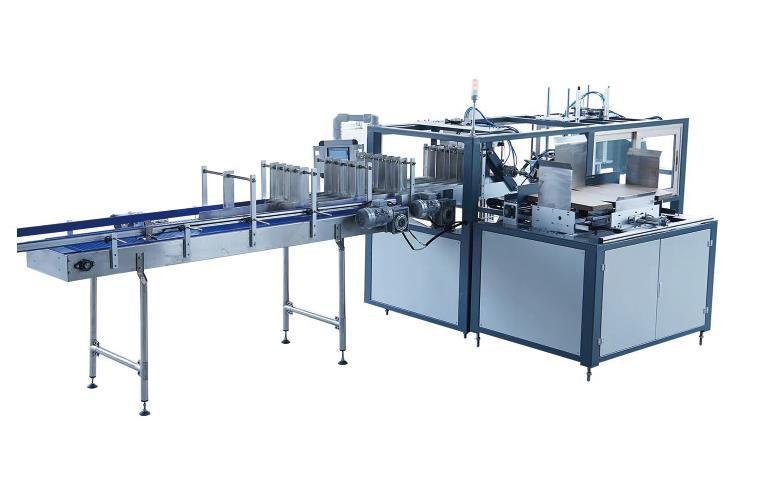
Convert filler output into the actual units arriving at the palletizer and include the packer pattern and normal short interruptions. Break the cell cycle into infeed grouping, pick or layer transfer, placement, divider handling, pallet exchange and discharge. Include replenishment time for empty pallets and consumables. Accumulation may protect the packing line for a limited period, but it should be sized from a clear recovery scenario rather than used to hide an undersized cell.
System focus 03
Robot and conventional layer-forming systems can both be appropriate. Compare motion complexity, number of formats, product fragility, required orientation, footprint, local support and changeover needs. The end effector is a project-specific interface and should be reviewed against real packs, caps and films. Ask how the system responds to a missing pack, damaged pallet, incomplete layer or product left in the cell after a stop.
System focus 04
The layout should separate operators from automatic motion and manage the boundary with forklifts or warehouse conveyors. Define fencing, gates, presence sensing, safe pallet replenishment, trapped-person prevention and controlled access for clearing faults. Safety design and validation must follow the selected equipment and destination requirements. Also preserve maintenance access, lifting routes and a practical method for removing product when the cell cannot complete a cycle.
System focus 05
Test the complete cell with approved packs, pallets and dividers for an agreed period and production pattern. Record achieved finished-unit flow, product damage, stack condition, stops and recovery. Exercise incomplete infeed, missing pallet, divider depletion, blocked discharge and format change where applicable. Verify drawings, recipes, safety records, maintenance instructions and operator training before closing the cell handover.
End-of-line cell brief
The same schedule should be used for equipment selection, layout review and acceptance planning.
| Decision area | Buyer input | Supplier response | Acceptance check |
|---|---|---|---|
| Handled unit | Pack drawing, mass, samples and permitted contact | Handling concept and limits | Damage and stability results |
| Pallet pattern | Pallet, divider and layer drawings | Cycle and pattern arrangement | Complete-pallet inspection |
| Logistics | Infeed, accumulation and warehouse route | Conveyor, buffer and exchange scope | Integrated flow and recovery |
| Safety and service | Plant standard and access needs | Guarding, safe states and clearances | Validated functions and service trial |
Final payload, speed, safety and layout requirements remain subject to approved products, pallets, site conditions and destination standards.
Technical reading
Confirm the standards, guidance and legal requirements that apply to the project location and product before final design.
Manufacturer reference used to frame complete-cell functions and product-flow interfaces; it does not select a system for this project.
Industry example used to compare pallet, rack, divider, gripper and warehouse decisions without adopting supplier-specific claims.
Buyer questions
Use these answers as a project-planning starting point. Final equipment and performance remain subject to the confirmed brief.
No. Selection depends on pack form, required motion, formats, speed, footprint, local support, maintenance capability and lifecycle needs. Compare the complete cell, not only the robot.
No. Convert bottle output into the actual bundle, tray, carton or large-bottle unit handled by the cell and include pallet exchange, divider handling, packer behavior and accumulation.
Provide representative finished packs with approved bottles, caps, labels, film or cartons plus pallet, divider and layer-pattern information. Temporary samples should be clearly identified.
Only when the process requires it. Returnable large-bottle systems and palletized empty-container supplies can need depalletizing, while an onsite PET blowing line normally has a different empty-container route.
Deep technical guides
Each guide answers one narrower project question and links the result back to complete-line scope.
Pallet stability belongs to the complete load—bottle, cap, water, bundle or case, layer pattern, slip sheet, pallet and stretch wrap—not to the wrapper setting alone.
A pallet stretch wrapper must apply a validated containment pattern without crushing lightweight bottled-water packs or leaving unstable lower layers. Load geometry, film behavior, pre-stretch, force distribution and transport hazards form one system.
Robotic and conventional layer palletizers should be compared by pack range, pattern complexity, good-load output, footprint, changeover, maintainability and safety. Robot flexibility is not useful without suitable grippers, infeed and validated cycle margin.
Capacities, process routes, layouts, utilities and equipment shown on this site are decision frameworks and reference examples. They are not a final specification, performance guarantee or offer. Confirmed scope and performance are defined in the signed technical and commercial agreement.
Allot Tech project desk
Share the source water, bottle, target output, pack format, factory status and destination. We will use them as the basis for a project-specific configuration discussion.