Match the machine to the bottle group and converted carton
Carton Packing Machine for Bottled Water
Carton packing performance depends on the filled bottle, approved board and case geometry, forming and loading sequence, closing method and the downstream pallet route.
How should a carton packing machine for bottled water be specified?
Define the intended carton or case style, bottle count and orientation, approved board and converted blank or case dimensions, closure method, printed surfaces, code area and distribution handling. Provide representative filled bottles and production-quality packaging materials. Ask the supplier to identify the packer concept, carton supply and forming boundary, bottle collation, loading, closing, sealing, inspection, reject and discharge scopes. Acceptance should run agreed formats through replenishment, low material, incomplete group, stop-restart, format change and transfer to the next conveyor or palletizing step. A case-per-minute rating has limited value unless the accepted bottle-pack combination and material condition are stated.
System focus 01
Release a controlled bottle-and-carton format matrix
For each stock-keeping unit, document bottle volume, filled mass, dimensions, label surface, cap height and stability, then pair it with the required bottle count and row orientation. The packaging record should identify carton style, converted dimensions, board construction, flute or grade basis where specified, scores, slots, manufacturer joint, print registration and permitted variation. State whether cases arrive flat, pre-erected or as trays and lids. Approved drawings and production samples are more reliable than a generic case description. The machine supplier should return supported formats, change parts, trials and any material feature that remains outside the proposed envelope.
Filled-bottle drawing, mass, stability and approved samples
Bottle count, row pattern and orientation inside the pack
Carton style, converted dimensions and board specification
Print, code panel, joint and supplied-material condition
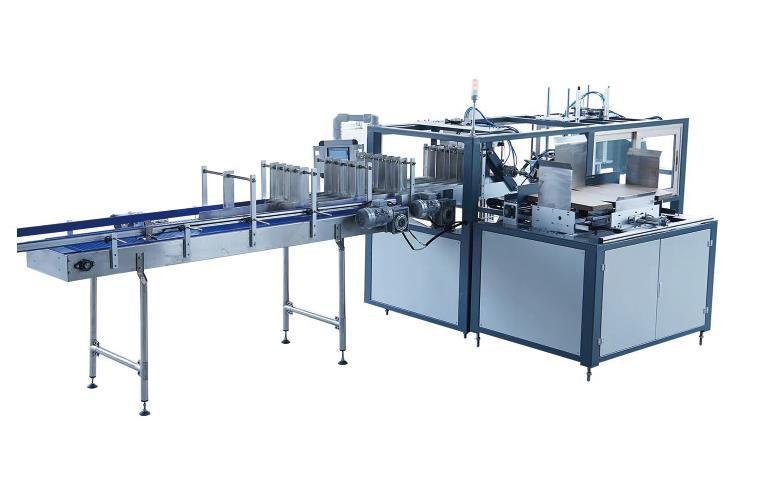
Reference equipment image. The final equipment selection, configuration and safeguards depend on the confirmed project brief.
System focus 02
Define carton storage, feeding and forming responsibility
Packaging supply affects both labor and machine continuity. Specify how blanks or cases arrive, their bundle or pallet condition, storage environment and replenishment method. The proposal should state magazine usable capacity, orientation, low-material warning and safe loading height. If cartons are erected within the packer, review blank pickup, opening, flap control and response to doubles or failed erection; if a separate erector is used, define the conveyor and signal boundary. Dust, damaged board and adhesive residue need a cleaning and waste route. Layout should leave space for material staging without obstructing operator or maintenance aisles.
Incoming packaging form, bundle orientation and storage condition
Magazine capacity, replenishment method and low-level warning
Erection, flap control and malformed-carton detection scope
Material staging, dust removal and rejected-board route
System focus 03
Coordinate bottle collation and loading with container stability
Bottle lanes, guides and grouping devices must create the specified pattern without scuffing labels, crushing lightweight bodies or accepting an incomplete group. Define upstream speed, bottle pressure, buffer, label orientation and line-state signals. The loading concept may lower, push, pick or wrap product according to the machine design and case style; buyers should review how it supports bottles and protects printed panels. Sensors should confirm group and package presence before motion. The recovery sequence for a fallen bottle, missing bottle or misformed carton needs safe access and a documented disposition for all material left in the machine.
Infeed lane, accumulation and bottle-pressure conditions
Group count, orientation and incomplete-pattern detection
Loading motion, product support and label-protection method
Jam access, retained-product and restart procedure
System focus 04
Specify closing, sealing, coding and inspection as one station
Clarify flap sequence and whether the pack uses tape, adhesive or another approved closure. List the applicator, melter or tape head, heating, extraction, consumables, guarding and cleaning responsibilities. If a code or label is applied, define content, data source, location and verification. Inspection may cover case presence, flap position, closure application, code or weight, but each configured characteristic and limitation must be documented. Decide how faulty cases are stopped, rejected or held, including tracking, reject confirmation and access for rework. Finished-pack checks should use approved methods rather than relying only on the applicator setting.
Flap sequence and selected carton-closure method
Adhesive, tape, heating and consumable supply boundary
Case code, label and production-data interface
Inspection, rejection, hold and rework response
System focus 05
Verify discharge, changeover and maintainability under load
Define the pack discharge elevation, orientation, conveyor support, accumulation and palletizer or manual palletizing interface. Cases must remain stable through transfers after closure and before the bond or tape condition is disturbed. A format matrix should list guides, group parts, magazines, recipes, closing settings, code selection, inspection choice and tools. Maintenance review covers vacuum parts, belts, chains, pushers, guides, sealing equipment and sensors, together with isolation and access. Acceptance should use production-representative board and filled bottles, record normal disturbances and changeover, and observe finished cartons through the actual next interface rather than stopping at the machine guard.
Discharge datum, orientation and conveyor responsibility
Accumulation and palletizer or manual-handling interface
Format parts, recipes, tools and first-pack checks
Representative-material run and dynamic pack evidence
Carton-packer scope matrix
Connect packaging material to every machine function
Use one format-by-format response so forming, loading and closing assumptions remain visible.
Scope area
Controlled input
Supplier response
Acceptance evidence
Finished pack
Bottle count, pattern, case style and handling route
Supported pack envelope and format parts
Approved carton samples and dynamic transfer
Carton supply
Board record, converted drawing and incoming condition
Magazine, feeding, forming and exclusions
Representative-material feed and erection record
Bottle loading
Filled bottle, lane and accumulation conditions
Grouping, support, loading and fault logic
Complete-group and recovery challenges
Closing
Flap sequence, adhesive or tape and pack criteria
Application equipment, controls and consumables
Closure samples after defined conditioning
Identification
Code content, location and data source
Printer, inspection, reject and tracking scope
Challenge samples and affected-product response
Handover
Discharge, accumulation and pallet interface
Conveyor scope, signals and responsibility drawing
Installed or simulated downstream-flow check
A carton-packer result is specific to the controlled filled bottle, converted packaging material, closure method, format settings and downstream handling represented in the test.
Buyer questions
Frequently asked questions
Use these answers as a project-planning starting point. Final equipment and performance remain subject to the confirmed brief.
Can a carton packer run both trays and regular slotted cases?
Some concepts support more than one packaging style, but this cannot be assumed. Each style has different material, forming, loading and closing requirements. Put every required pack in the inquiry and obtain a supported format and change-part declaration.
Why must the carton supplier be involved before machine acceptance?
Board construction, converted dimensions, scores, joints, moisture condition and print can affect feeding, erection and closing. Production-quality samples and controlled drawings help distinguish material variation from machine setup or design issues.
Is a case count enough to confirm complete packs?
No. A machine counter may record cycles or discharged cases without proving the correct bottle count or closure condition. Use configured detection plus an approved sample and reconciliation plan suited to the project.
What should be checked at the carton-packer discharge?
Observe pack orientation, stability, closure, code, damaged board and behavior through transfers, accumulation and the pallet interface. The required checks depend on the approved case design and downstream handling route.
Continue planning
Related production-line decisions
Move to the technical decision that depends on the information covered on this page.
Agree samples, interruptions, pack checks and evidence before FAT.
Project-specific confirmation
Capacities, process routes, layouts, utilities and equipment shown on this site are decision frameworks and reference examples. They are not a final specification, performance guarantee or offer. Confirmed scope and performance are defined in the signed technical and commercial agreement.
Allot Tech project desk
Turn your requirements into a comparable line brief.
Share the source water, bottle, target output, pack format, factory status and destination. We will use them as the basis for a project-specific configuration discussion.