FORCE Technology dead-leg design guidance
Technical institute reference used for the effect of branch orientation, flow exchange and risk-based dead-leg review; it is not a project piping specification.
Design the treated-water route to remain inspectable and cleanable
Sanitary material alone does not make a hygienic piping system when the route retains water, hides branches or cannot be verified after installation.
Direct answer
Review the complete product-water path from the final treatment stage through storage, transfer and the filler connection using an approved P&ID and physical walkdown. Confirm product-compatible materials, documented weld and joint quality, hygienic valve and instrument placement, separation from non-product water, practical slope and drainability, vent and overflow protection, sampling access and cleanable branches. Avoid unnecessary dead legs; where an instrument or branch is required, assess its geometry, orientation, flow exchange and cleaning method for the real process. Define how tanks, pumps, returns and cleaning circuits behave in production, shutdown and sanitation modes. Acceptance needs drawings, material and fabrication records where specified, inspection, pressure or leak tests, cleaning evidence and an as-installed route review.
System focus 01
Start with the actual source-treatment outcome, product definition, storage concept, filler demand, operating schedule and sanitation strategy. Mark every product-contact tank, pump, pipe, valve, instrument, sample point, vent, overflow, return and drain. Give each line a service, direction and destination. Distinguish product water from operational, cleaning and cooling water, and show permitted cross-connections or physical separation. A simplified marketing flowchart cannot support hygienic review because it omits branches and operating states where stagnation or contamination can develop.
System focus 02
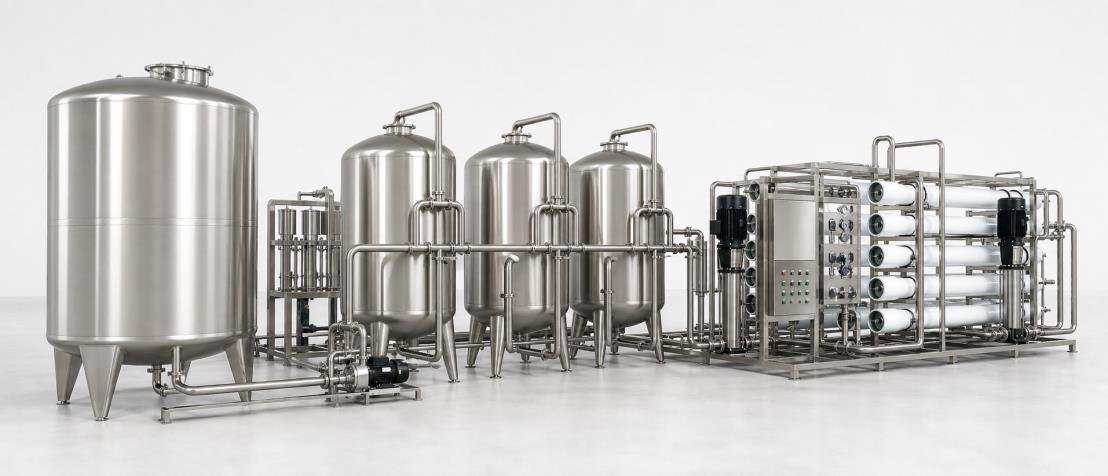
Select product-contact materials from water chemistry, cleaning agents, temperature, pressure, local rules and required surface condition rather than naming a stainless grade in isolation. Define compatible seals, valve seats, instrument wetted parts and any non-metallic components. Agree joint type, weld procedure, welder qualification, internal-finish expectation, inspection and passivation or cleaning records where required by the project. Threaded or temporary joints need explicit risk review in product-contact service. Preserve material identity and fabrication records so repairs do not introduce an unknown substitute.
System focus 03
Route piping so it can drain or remain in a validated circulating condition as intended. Review high points, low points, reducers, tees, instrument branches, capped stubs and spare connections. There is no responsible universal dead-leg ratio for every process; use the applicable hygienic-design guidance and a competent project risk assessment. Where a branch is unavoidable, consider flow direction, projection into the main flow, orientation and how cleaning reaches it. Protect tank vents, overflows and vacuum breaks from introducing contamination while allowing safe operation.
System focus 04
Every device should serve a defined operating or verification purpose without creating a difficult-to-clean pocket. Identify isolation, diversion, non-return, control and drain functions and show their safe states. Locate sample points where they answer a specific quality question and can be sanitized and used without contaminating the line. Instruments need range, accuracy, removal access and a hygienic connection appropriate to duty. Consider what happens during calibration or replacement: bypasses, blanks and temporary hoses can change the hygienic boundary if they are not controlled.
System focus 05
Hygienic intent can be lost through site routing, poor supports, reversed valves or undocumented branches. Walk the route against the latest P&ID and isometric records. Verify identity, direction, slope, drain points, accessibility, weld or joint records and separation. Complete required pressure, leak, flushing, cleaning and sanitation checks under approved methods, then confirm the system delivers the agreed flow and pressure without unsafe or stagnant behavior. Update drawings for field changes and carry approved restrictions into operation and maintenance procedures.
Piping review
Review the actual P&ID and installed route; a material list alone cannot establish hygienic performance.
| Review area | Design input | Risk to resolve | Acceptance evidence |
|---|---|---|---|
| Route and drainage | Modes, elevations, storage and filler demand | Retention or uncontrolled drain path | P&ID walkdown and slope/drain check |
| Materials and joints | Water, cleaning, pressure and temperature duty | Corrosion, incompatibility or poor fabrication | Approved records and inspection |
| Branches and devices | Control, sample and instrument purpose | Dead leg, air entry or uncleanable pocket | Risk review and functional check |
| Handover | Field changes and cleaning strategy | Design no longer matches operation | As-installed drawings and release record |
Final materials, fabrication acceptance and hygienic geometry must follow the approved project specification and applicable requirements.
Editable buyer worksheet
Walk the treatment-to-filler route and record drainability, dead-leg, valve, sample-point, cleaning and acceptance evidence.
Technical reading
Confirm the standards, guidance and legal requirements that apply to the project location and product before final design.
Technical institute reference used for the effect of branch orientation, flow exchange and risk-based dead-leg review; it is not a project piping specification.
Hygienic-engineering research reference used to support evidence-led assessment of dead ends in liquid-food systems.
International primary reference for hygienic establishment, processing and packaged-water controls; local legal requirements remain controlling.
Buyer questions
Use these answers as a project-planning starting point. Final equipment and performance remain subject to the confirmed brief.
No. Hygienic performance also depends on material suitability, internal condition, joints, route, drainage, branches, valves, vents, cleaning method, fabrication quality and the installed system matching the approved design.
Do not select a universal ratio from a generic page. Applicable guidance, process duty, orientation, flow, cleaning method and destination requirements must be reviewed by competent designers. Avoid unnecessary branches and document any exception.
Not universally. Storage, loop, filler demand, sanitation method and shutdown strategy determine the suitable approach. The chosen design must control stagnation and be supported by operating and verification evidence.
Only when their material, connection, storage, cleaning, identification and controlled use are appropriate to the project. Permanent convenience hoses can create unrecorded cross-connections and cleaning risks.
Capacities, process routes, layouts, utilities and equipment shown on this site are decision frameworks and reference examples. They are not a final specification, performance guarantee or offer. Confirmed scope and performance are defined in the signed technical and commercial agreement.
Allot Tech project desk
Share the source water, bottle, target output, pack format, factory status and destination. We will use them as the basis for a project-specific configuration discussion.