Codex hygienic practice for packaged drinking water
International primary source for preventing contamination during filling and sealing and for hygienic establishment controls.
Review cleanability and contamination control before approving features
A high machine rating does not show whether the filler can be cleaned, inspected and maintained without exposing product or open bottles.
Direct answer
Define the water, bottle, closure, filling method, operating schedule, cleaning strategy and required environmental boundary, then follow product and open-container exposure through rinsing, transfer, filling and capping. Review product-contact materials and surfaces, valve and bowl or manifold cleanability, drainability, splash and aerosol control, condensation paths, lubrication separation, guarding, access and maintenance intervention. Confirm how the enclosure, air management, bottle and cap supply and treated-water piping protect the filling zone. Require drawings, cleaning circuit information, material or fabrication evidence where specified, inspection access, FAT/SAT challenge methods and post-maintenance release steps. Hygienic design is a risk-controlled system, not a finish grade or marketing label.
System focus 01
Still purified water, water defined by origin and other permitted products may have different treatment and hygienic assumptions. Record bottle material, format range, purchased versus in-house bottle route, closure condition, production schedule and shutdown exposure. State whether the filler is conventional, enclosed, ultraclean or another contractually defined category without treating those words as equivalent. The design review should begin with the hazards and operating conditions the machine must control, including the destination rules and plant prerequisite programs.
System focus 02
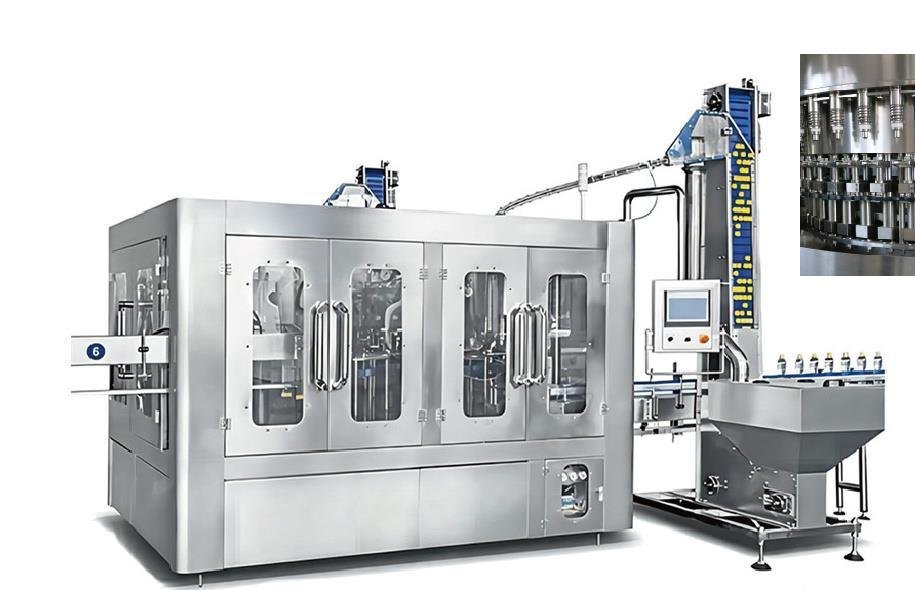
Use a sectioned drawing to follow treated water from the inlet through any tank, manifold, valve and nozzle and then follow the bottle from rinser discharge until closure. Identify where product can pool, spray, aerosolize or contact a surface and where an open bottle passes beneath overhead components. Review non-product services and lubricants that could enter these zones. A hygienic boundary should show which surfaces are cleaned in place, cleaned out of place or manually cleaned and how their condition is inspected.
System focus 03
Review product-contact materials, seals, joints, surface condition and component geometry against the approved cleaning chemistry and duty. External machine surfaces in the filling zone should shed rather than retain water and provide access around frames, feet, guards and cable routes. Internal circuits need defined flow paths, valve states, coverage and return behavior. Do not accept a nominal CIP connection as proof of cleanability. Ask how cycle parameters are measured and how dismantled parts, dead ends and shadowed external areas are handled.
System focus 04
Operators must be able to inspect valves, seals, nozzles, cap handling and drains without climbing over exposed areas or using uncontrolled tools. Define access doors, safe isolation, component removal, part identification and reassembly verification. Locate lubrication points and service components outside sensitive zones where practical. When maintenance enters the product or open-bottle boundary, require tool and part reconciliation, cleaning or sanitation as applicable, inspection and authorized release before production resumes.
System focus 05
Review approved drawings and fabrication evidence before shipment, then inspect the actual machine. FAT can exercise cleaning sequences, drain behavior, alarms and component access when the agreed utilities and materials are available. SAT should confirm installed product and utility connections, enclosure interfaces, room conditions, cleaning execution, sampling and production-quality checks under the approved protocol. Record deviations and their effect on operation. One satisfactory product sample does not by itself validate the entire hygienic design or sanitation program.
Hygienic design gate
Ask each supplier to show how the proposed machine controls the project-specific duty rather than checking a feature label.
| Zone | Question | Required deliverable | Verification |
|---|---|---|---|
| Product circuit | Can every path be cleaned, drained and inspected? | Circuit and cleaning narrative | Sequence, drain and inspection evidence |
| Open-container path | What can enter the bottle before closure? | Exposure and enclosure review | Installed interface and challenge checks |
| External machine | Can surfaces be accessed and kept dry/clean? | Hygienic layout and task plan | Walkdown and sanitation review |
| Maintenance | How is the hygienic state restored? | Isolation and release procedure | Post-work verification record |
Final filler suitability and cleaning controls must be confirmed for the selected machine, product, plant program and destination requirements.
Editable buyer worksheet
Review exposed-container paths, product zones, access, cleanability, drainage, condensation and supplier acceptance evidence.
Technical reading
Confirm the standards, guidance and legal requirements that apply to the project location and product before final design.
International primary source for preventing contamination during filling and sealing and for hygienic establishment controls.
European industry guidance recognized by the European Commission, used for air, contamination, maintenance and hygienic-practice review boundaries.
Official manufacturer reference used to understand a current water-filling architecture; product claims are not generalized to other machines.
Buyer questions
Use these answers as a project-planning starting point. Final equipment and performance remain subject to the confirmed brief.
It can remove one contact mechanism, but the complete design still includes product circuits, open-bottle exposure, air, surfaces, drains, cleaning, cap handling, maintenance and operating controls. Review the whole boundary.
The suitable room and enclosure approach depends on product, treatment, bottle route, machine design, risk assessment and local requirements. Do not assign a universal cleanroom class from a generic page.
No. Review circuit coverage, flow path, valve sequence, retained areas, drainage, measurement, inspection and any manual or COP tasks. Validation requires an approved site-specific method.
Follow the OEM and site procedure for isolation, correct part, hygienic handling, reassembly, leak or function checks, cleaning or sanitation, tool/part reconciliation and authorized production release.
Capacities, process routes, layouts, utilities and equipment shown on this site are decision frameworks and reference examples. They are not a final specification, performance guarantee or offer. Confirmed scope and performance are defined in the signed technical and commercial agreement.
Allot Tech project desk
Share the source water, bottle, target output, pack format, factory status and destination. We will use them as the basis for a project-specific configuration discussion.