Codex hygienic practice for packaged drinking water
Intergovernmental source used for general container washing, disinfection and hygienic handling context.
Define what rinsing must control for the approved container route
Bottle rinsing is a controlled preparation step whose method, medium and evidence should follow the incoming container and filling-system risk assessment.
Direct answer
Start with the approved bottle route: newly blown PET, purchased empty bottles or cleaned returnable containers have different incoming conditions and should not share an assumed rinse duty. Define the purpose of rinsing, approved rinse medium, bottle orientation, internal coverage, contact or drain time where relevant, supply quality, flow, pressure, recovery or disposal and the protected handover to filling. Specify no-bottle logic, blocked-nozzle or low-supply detection where required, cleanability and safe access. Verification should use representative bottles and an approved inspection or sampling plan under actual operating conditions. A visible spray does not by itself establish coverage, hygiene or removal performance.
System focus 01
The container history determines the preparation problem. A newly blown PET bottle has a controlled forming and transfer route, purchased bottles need supplier and storage controls, and returnable bottles require receiving, rejection and validated washing before any final rinse. Document which routes the equipment will handle and prohibit an ordinary rinser from being described as a returnable-bottle washer. The food-safety and packaging teams should approve the incoming condition for each format.
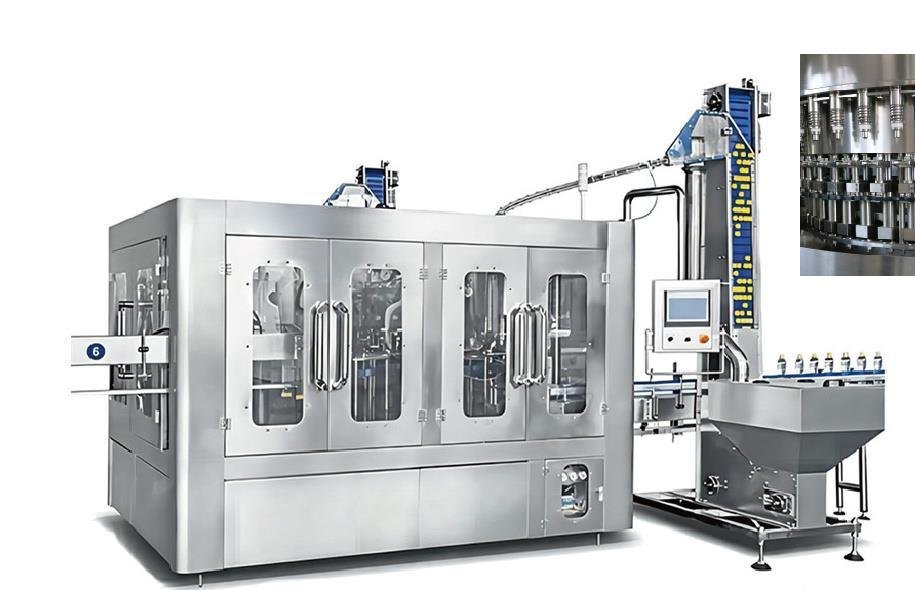
System focus 02
State whether the process uses approved product water, another qualified water supply, treated air or a project-specific medium. Define the condition at the machine connection, including quality, pressure, flow, temperature and permitted variation. Identify tanks, pumps, filters, final treatment, return loops and interconnecting pipes in the scope. Recovered rinse water needs a clearly approved destination and should not be assumed suitable for product use.
System focus 03
Review neck support, grippers, inversion, nozzle position, spray pattern and dwell using actual bottles. Large or unusual shapes can behave differently during inversion and drainage. Define how broken, deformed or incorrectly positioned bottles are detected and contained. The transfer from rinse discharge to filling should minimize uncontrolled exposure and prevent residual rinse from affecting fill operation or finished volume.
System focus 04
The control narrative should prevent uncontrolled spray and identify conditions that make the rinse invalid. Define bottle-present logic, supply permissives, low-pressure or low-flow alarms, start-up flushing, stop behavior and restart. If individual-nozzle monitoring is not provided, state the approved manual inspection and verification method. Cleaning of tanks, manifolds, nozzles and guards needs accessible connections, drain paths and documented responsibility.
System focus 05
Develop checks that match the purpose of rinsing and the applicable quality plan. Functional testing can verify bottle handling, spray operation, drainage, alarms and no-bottle logic, while hygiene or removal claims need a suitable sampling and validation method approved by qualified parties. Record bottle format, speed, rinse conditions, instruments and sample identity. Reverify after nozzle changes, relevant maintenance, rinse-medium changes or new bottle formats.
Bottle-rinse design matrix
Use one basis for container handling, rinse services, controls and acceptance.
| Decision | Input | Equipment response | Evidence |
|---|---|---|---|
| Bottle route | New, purchased or returnable container condition | Defined preparation boundary | Approved incoming-container specification |
| Rinse medium | Quality, flow, pressure and destination | Supply, manifold and drain scope | Connection and operating records |
| Coverage | Bottle geometry and required treatment | Grip, nozzle, orientation and drain design | Representative functional check |
| Verification | Purpose, method and change triggers | Access, alarms and sample support | Controlled inspection or validation record |
Rinse method and verification criteria must follow the approved bottle route, quality plan and applicable local requirements.
Technical reading
Confirm the standards, guidance and legal requirements that apply to the project location and product before final design.
Intergovernmental source used for general container washing, disinfection and hygienic handling context.
Sector reference used to distinguish returnable-container washing and final-rinse verification from ordinary new-bottle rinsing.
Buyer questions
Use these answers as a project-planning starting point. Final equipment and performance remain subject to the confirmed brief.
No. Returned containers need receiving controls, rejection, external and internal washing, rinsing and verification designed for their unknown use history. A normal PET rinser is a different process.
The approved medium follows the product, process design and applicable requirements. Its quality and handover condition should be explicitly defined rather than assumed.
No. Verification also considers bottle presence, nozzle condition, alignment, coverage, orientation, timing, drainage and the selected monitoring or sampling plan.
Only through a reviewed and approved segregation, treatment, monitoring and use plan. Recovery does not automatically make the water suitable for product contact or another sensitive duty.
Deep technical guides
Each guide answers one narrower project question and links the result back to complete-line scope.
Ionized-air and water rinsing address different empty-bottle contamination scenarios. Selection should follow bottle supply, expected debris, water availability, package design, validation method and whether the rinse itself could introduce moisture or contamination.
Capacities, process routes, layouts, utilities and equipment shown on this site are decision frameworks and reference examples. They are not a final specification, performance guarantee or offer. Confirmed scope and performance are defined in the signed technical and commercial agreement.
Allot Tech project desk
Share the source water, bottle, target output, pack format, factory status and destination. We will use them as the basis for a project-specific configuration discussion.