Whole-line diagnosis from lost time to first constraint
Water Bottling Line Low-Output Troubleshooting
Low shift output is rarely explained by one machine nameplate. Starvation, blocking, material replenishment, utilities, short stops, changeovers, quality rejects and reporting boundaries can remove output at different points in the production window.
How should a low-output water bottling line be troubleshot?
First define the expected and actual output on the same bottle, pack, time window and good-product handover point. Observe only from approved safe locations and never bypass a guard or blockage signal to gain speed. Hold the production basis stable while isolating treated water, bottles, caps, labels, packaging, utilities, staffing, recipes and planned activities. Measure event duration, frequency, starvation, blocking and rejects in production order to identify the first recurring constraint rather than blaming the machine with the most visible stop. Correct the evidenced cause, then repeat a controlled whole-line run and verify both good output and quality.
System focus 01
1. Define the output gap on one production basis
State the reference bottle, cap, label, pack, product and scheduled production window. Distinguish nameplate rate, instantaneous machine speed, gross bottle count and accepted finished packs at the handover point. Remove planned sanitation, approved changeovers or breaks only if the reporting definition says to do so, and document every exclusion. Compare like periods rather than a short peak with a full shift. Note whether the gap is constant, grows during the run, follows a format, appears after replenishment or is concentrated at startup and restart. This definition prevents accounting differences, pack conversions or rejected units from being mistaken for a mechanical bottleneck.
Use one bottle and pack conversion for expected and actual output
Name the good-product counter and handover location
Define scheduled time, planned exclusions and reporting window
Separate gross production, rejects and released finished packs
Describe when the gap appears and whether it repeats
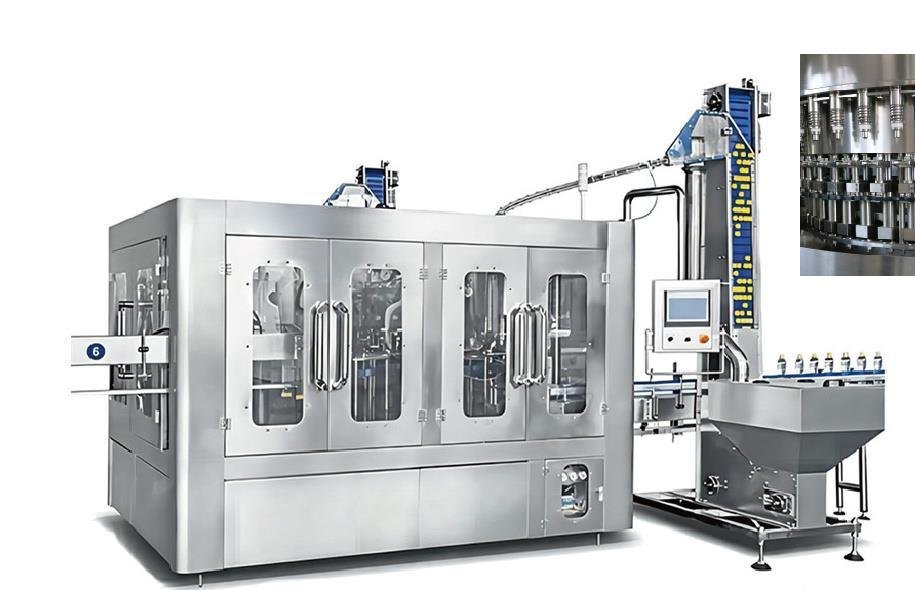
Reference equipment image. The final equipment selection, configuration and safeguards depend on the confirmed project brief.
System focus 02
2. Observe safely without defeating the line controls
A bottling line contains conveyors, rotating machines, heat, compressed air, electrical energy, wet floors and automatic restarts. Observe operating behavior only from designated safe positions. Apply approved stop and energy-isolation procedures before clearing jams, touching sensors, entering guards or inspecting driven components. Never bridge a blockage sensor, door switch or interlock to make the line run longer; doing so hides the event while adding serious risk. Maintain hygienic controls around exposed bottles and product. If damaged containers, leaks, unstable packs or abnormal machine motion are present, contain affected production and involve trained maintenance and quality personnel before continuing the investigation.
Use safe observation points and normal diagnostic displays
Isolate energy before clearing or entering equipment
Do not bypass blockage, starvation or safety signals
Control wet areas, broken containers and unstable packs
Protect open bottles, caps and product-contact zones
System focus 03
3. Isolate material, utility, staffing and schedule inputs
Confirm continuous usable supply of treated water, acceptable bottles, caps, labels, coding consumables and packaging materials for the reference run. Check utility conditions at their specified boundaries, including electrical supply, compressed-air levels, cooling and drainage behavior under simultaneous demand. Verify that approved recipes and change parts are installed and that operators have planned replenishment and changeover resources. Separate planned work from unplanned loss. Review whether upstream machines starve the filler, whether the packer blocks it, or whether a quality hold reduces reported output after the line runs. Hold the format and materials stable while each input family is assessed so the measured pattern can be attributed.
Confirm usable water and bottle supply, not nominal source capacity
Verify caps, labels, code media and pack materials by approved lots
Check utilities during simultaneous production demand
Confirm recipes, change parts, staffing and replenishment plan
Separate upstream starvation, downstream blocking and quality loss
System focus 04
4. Measure events at the first point where flow is lost
Create a time-based event log with start, end, location, machine state, observed trigger, product effect and recovery action. Use machine history and counters where their definitions are understood, then confirm them with direct safe observation. Record both frequency and duration because repeated seconds can exceed one long repair. Trace the material flow in order: treated water, bottle preparation, filling, capping, inspection, labeling, packing and finished discharge. At each interface note starvation, blocking, accumulation level, rejects and recovery. Avoid double-counting one event across several stopped machines. Calculate the good-output effect using the agreed reporting basis and compare evidence over representative periods rather than assuming the slowest nameplate is the constraint.
Log start, end, location, trigger and recovery for each event
Measure both stop frequency and accumulated duration
Trace starvation and blocking in production order
Assign one primary event without double-counting followers
Link rejected units and lost time to the good-output boundary
System focus 05
5. Remove one supported constraint and repeat a whole-line run
Select a corrective action that addresses the measured first constraint and falls within approved operating, maintenance and change-control procedures. It may involve restoring an input, repairing a confirmed fault, improving a replenishment method, correcting a format setup or revising an agreed work sequence; it should not be an arbitrary speed increase. Return all guards and controls to service and verify hygiene before restart. Run the same product, bottle and pack over a comparable documented window. Repeat event logging and measure accepted finished output at the same point. Confirm that the improvement does not shift unsafe accumulation, defects or labor burden downstream. Record remaining constraints and continue one evidence-based cycle at a time.
Choose the first measured constraint rather than the loudest stop
Use authorized repair, setup or work-method changes
Restore safeguards and hygienic readiness before restart
Repeat the same output basis and event log
Confirm quality, accumulation and downstream workload remain controlled
Low-output diagnostic path
Find the first repeated constraint in material-flow order
Keep one product, time and good-output definition while tracing the event that first removes flow.
1. Define the gap
Align reference format, scheduled time, exclusions, gross counts and accepted output.
2. Observe safely
Use normal controls and safe positions without bypassing blockage or protective functions.
3. Isolate the inputs
Check materials, utilities, recipes, people and planned activities on a stable run basis.
4. Measure first loss
Log frequency and duration and distinguish the initiating event from machines that stop afterward.
5. Correct and rerun
Remove one supported constraint and repeat the same whole-line output and quality checks.
This method supports diagnosis but does not authorize faster settings, disabled controls or entry into operating machinery. Apply the site safety rules and approved equipment limits.
Buyer questions
Frequently asked questions
Use these answers as a project-planning starting point. Final equipment and performance remain subject to the confirmed brief.
Why is filler nameplate speed different from shift output?
Nameplate speed describes a defined machine condition. Shift output also reflects supply, downstream capacity, short stops, changeovers, sanitation, rejects and the location where good product is counted.
Should the machine with the most downtime always be fixed first?
Not automatically. It may be stopped because an earlier machine starved it or a later machine blocked it. Trace the first event in material-flow order and quantify its output effect.
Can increasing conveyor or machine speed solve low output?
Only if approved engineering evidence identifies speed as the constraint and confirms safe interfaces. Arbitrary increases can create instability, damage, rejects or unsafe accumulation.
How long should an output retest run?
Use the duration and conditions agreed in the project or improvement plan. It must be long enough to represent the recurring events under investigation; no universal duration fits every line.
Continue planning
Related production-line decisions
Move to the technical decision that depends on the information covered on this page.
Investigate label materials, application positions and packing interactions that reduce good packs.
Project-specific confirmation
Capacities, process routes, layouts, utilities and equipment shown on this site are decision frameworks and reference examples. They are not a final specification, performance guarantee or offer. Confirmed scope and performance are defined in the signed technical and commercial agreement.
Allot Tech project desk
Turn your requirements into a comparable line brief.
Share the source water, bottle, target output, pack format, factory status and destination. We will use them as the basis for a project-specific configuration discussion.