Teledyne API ozone monitoring in bottling plants
Application reference used to frame generator, dissolved-process and ambient-safety monitoring functions without adopting universal settings.
Engineer generation, contact, monitoring and safety as one system
A bottled-water ozone system must deliver a validated treatment under defined water conditions while controlling residuals, off-gas and worker exposure.
Direct answer
Begin with representative water analysis, the approved product specification, flow pattern, storage and the treatment objective established by qualified process and food-safety specialists. Define the complete system boundary: feed-gas preparation, ozone generator, cooling, injector or contact method, recirculation, contact vessel, off-gas separation and destruction, dissolved-ozone monitoring, ambient leak monitoring, ventilation, alarms and interlocks. Assess bromide and other source-water conditions relevant to by-product risk before setting treatment conditions. Validation and acceptance should use approved methods under representative flow, temperature, water quality and operating states. No universal concentration, contact time or residual should be copied into a project specification without the applicable technical and regulatory basis.
System focus 01
State whether ozone is intended for a treatment barrier, storage control, bottle-filling residual or another approved purpose. Provide source and treated-water analysis, relevant seasonal variation, temperature, pH, organics and bromide information where applicable. Identify the flow and operating states that the system must cover. The responsible specialist should document the technical basis and any required pilot work rather than applying a standard dose from a brochure.
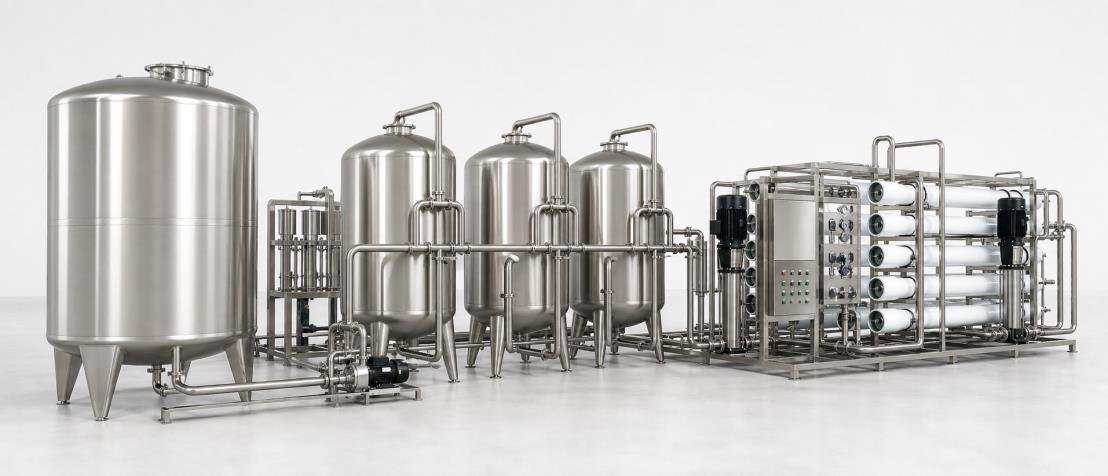
System focus 02
Ozone output depends on feed-gas condition, generator control, cooling and the selected injection method. Define oxygen or air preparation, dryer where relevant, gas flow, generator turndown, cooling-water requirements, injector, booster or recirculation pump and gas-liquid mixing. Ask for materials and seals suitable for the confirmed service. Assign every pipe, valve, instrument, oxygen component and electrical interface to a named scope.
System focus 03
The contact arrangement must reflect actual flow, vessel geometry and hydraulic behavior. Define the working volume, inlet and outlet arrangement, recirculation, gas separation, vent route and off-gas destruct. Prevent uncontrolled ozone release at tanks, drains or vents and review room ventilation. The system should respond safely to no water flow, low gas flow, failed destruct, high ambient ozone or loss of extraction.
System focus 04
Generator output, dissolved ozone and ambient ozone answer different questions and need suitable instruments and sample conditions. Define each measurement point, range, response time, sample conditioning, calibration or verification method and alarm consequence. One sensor at an easy pipe location may not represent the contact outlet or filler feed. Protect instruments from unsuitable pressure, bubbles, moisture or ambient conditions and preserve safe access for service.
System focus 05
Develop a validation protocol with qualified process, microbiological and regulatory review. Record water condition, flow, temperature, generator and contact settings, measurement instruments and sampling methods. Commission alarms, ventilation, interlocks, emergency shutdown and off-gas destruction as well as normal process control. Define routine verification, maintenance and revalidation triggers after changes to water source, flow, tank, injection, monitoring or product requirements.
Ozone system design matrix
Complete each design block before approving equipment output or operating settings.
| Design block | Input | Supplier or specialist output | Verification |
|---|---|---|---|
| Water and target | Analysis, variation, flow and objective | Treatment and by-product assessment | Approved validation basis |
| Generation and contact | Feed gas, hydraulics and site conditions | Complete process and equipment scope | Installed operating data |
| Monitoring and safety | Measurement points and exposure controls | Instrument, alarm and interlock schedule | Functional challenge records |
| Ongoing control | Maintenance and change scenarios | Check and revalidation plan | Controlled trend and service records |
Treatment conditions and safety limits require qualified project-specific approval and confirmation of applicable local requirements.
Technical reading
Confirm the standards, guidance and legal requirements that apply to the project location and product before final design.
Application reference used to frame generator, dissolved-process and ambient-safety monitoring functions without adopting universal settings.
Instrumentation reference used for dissolved-ozone measurement and process-control questions.
Government engineering reference used for ozone contact, monitoring and chemical-system design context; it is not a bottled-water project specification.
Buyer questions
Use these answers as a project-planning starting point. Final equipment and performance remain subject to the confirmed brief.
There is no universal value. Treatment conditions depend on the objective, water composition, temperature, flow, contact system, product requirements, by-product risk and applicable rules.
No. Process-water and room-air exposure are different concerns. The safety design may require ambient monitoring, ventilation, off-gas destruction, alarms and interlocks based on the installed system.
Bromide and operating conditions can influence bromate formation. Representative analysis and qualified process review are needed before setting treatment conditions.
No. Ozone can be one approved treatment control, but equipment cleaning, hygienic design, source protection, packaging control, monitoring and release remain separate responsibilities.
Deep technical guides
Each guide answers one narrower project question and links the result back to complete-line scope.
An ozone contact system must deliver the approved disinfection or oxidation duty while controlling transfer, residual, off-gas and worker exposure. Tank volume alone does not establish contact performance because mixing, demand, decay and short-circuiting matter.
Capacities, process routes, layouts, utilities and equipment shown on this site are decision frameworks and reference examples. They are not a final specification, performance guarantee or offer. Confirmed scope and performance are defined in the signed technical and commercial agreement.
Allot Tech project desk
Share the source water, bottle, target output, pack format, factory status and destination. We will use them as the basis for a project-specific configuration discussion.