Plan small bottles as a high-count packaging system
330ml and 500ml Water Bottling Line
A 330ml or 500ml format can drive high bottle counts, frequent material replenishment and sensitive lightweight-container handling even when packaged-water volume is moderate.
How should a 330ml or 500ml water bottling line be selected?
Define one controlled bottle, cap, label and finished-pack combination for each small format, then state required saleable output by hour, shift and product mix. Confirm whether bottles are blown onsite or supplied empty, because that choice changes preform handling, compressed air, storage and unscrambling. Compare treatment, filling, conveying, labeling and packing on the same reference format and operating assumptions. Small bottles may increase container, label, cap and pack counts quickly, so material logistics, accumulation and rejects matter alongside machine speed. Accept the line with representative materials through normal stops, restart, replenishment and format change; a filler rating alone is not complete-line capability.
System focus 01
Translate demand into bottles, packs and material movements
Start with customer channels, bottle volume, bottles per finished pack, planned shifts and the number of good packs needed at the agreed count point. Convert bottled-water volume into bottle, cap, label and secondary-pack quantities for each scenario. A smaller bottle can create more machine cycles and replenishment events for the same water volume, increasing pressure on feeding, coding and packing. Keep scheduled time, availability, rate performance and quality assumptions explicit rather than multiplying nominal bottles per hour by a full shift. Warehouse and pallet calculations should use the actual pack and dispatch policy, not a generic bottle-size category.
Reference 330ml and 500ml bottle-pack combinations
Good bottles and complete packs required per shift
Cap, label, film or carton consumption by scenario
Finished-pack, pallet and dispatch handling basis
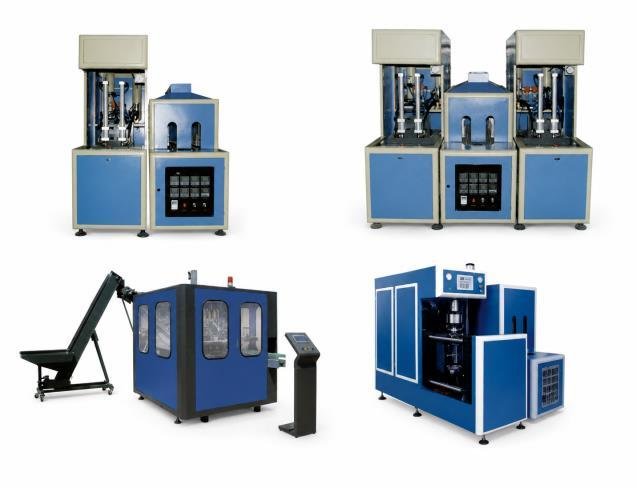
Reference equipment image. The final equipment selection, configuration and safeguards depend on the confirmed project brief.
System focus 02
Qualify lightweight bottles through blowing or bulk supply
Release the bottle drawing, preform and neck finish, target mass, base geometry, label panel and performance checks with the packaging team. If bottles are blown onsite, request format-specific blower output, cavity and mold scope, heating and cooling conditions, high-pressure air demand and the transfer to filling. If empty bottles are purchased, define incoming inspection, bulk packaging, storage, unscrambling and exposure controls. Lightweight small bottles can be sensitive to heat, guides, air-conveyor settings and accumulation pressure. Trials should use the intended bottle design rather than a heavier substitute that hides handling problems.
Approved bottle, preform, neck and closure drawings
Onsite blowing duty or purchased-bottle logistics route
Bottle stiffness, base stability and surface requirements
Empty-bottle inspection and transfer condition at filling
System focus 03
Match filling and closure operation to the small format
State the water product, filler inlet conditions, bottle geometry, neck support, target fill basis and cap combination for each format. Ask the supplier to identify machine configuration, format parts, recipe and any rate difference between 330ml and 500ml. Water-treatment and product-storage capacity should be checked by volume over the operating schedule, while the filler and cap system is checked by container count and dynamic behavior. Define missing-bottle, missing-cap, fill and closure inspection boundaries. Finished output requires an approved quality plan; the number of filling valves cannot predict good packs at the end of the line.
Water product and filler-feed pressure-flow condition
Bottle transfer, fill basis and closure pairing
Format-specific parts, recipes and declared rate basis
Fill, cap, reject and affected-product response plan
System focus 04
Engineer high-count conveying, labeling and packing interfaces
Small bottles can tip, compress or surge when conveyor speed, guides and low-pressure control are poorly matched. Map every transfer and the usable accumulation before the labeler and packer. Labeling selection should use the approved bottle surface and label material, including moisture condition after filling. The packer must form the specified bottle pattern and discharge a stable bundle or carton at the required orientation. Coding and inspection devices need enough spacing and tracking. Test short stops and recovery because a fast steady run does not reveal whether downstream blocking sends unstable queues back toward the filler.
Bottle pitch, guides, speed zones and accumulation control
Label material, bottle moisture and coding interface
Finished-pack pattern, orientation and discharge support
Blocked, starved, reject and controlled-recovery logic
System focus 05
Accept format capability with utilities and real materials
Build a utility schedule for the reference bottle and pack that covers treatment water, power, compressed air, blower air where applicable, cooling, ventilation and heat-related packing loads. Identify simultaneous peaks, not only average consumption. The acceptance plan should allocate sufficient preforms or bottles, caps, labels and packing material for stable operation and event tests. Record the actual format, settings, count point, scheduled window, rejected output and utility conditions. Demonstrate the agreed change between 330ml and 500ml, including parts, recipes, first-good checks and material clearance. Results remain specific to the represented package and project conditions.
Reference-format and simultaneous utility load schedule
Production-representative material quantities and ownership
Agreed count point, event test and reject reconciliation
330ml-to-500ml changeover and first-good release record
Small-bottle format matrix
Compare 330ml and 500ml on one complete-line basis
Use one row per controlled bottle and pack so nominal volume does not replace geometry or evidence.
Decision input
330ml record
500ml record
Evidence required
Container
Drawing, preform and approved sample
Drawing, preform and approved sample
Bottle and neck revision control
Output
Reference BPH and good packs per shift
Reference BPH and good packs per shift
Count point and explicit loss assumptions
Water duty
Volume demand and storage draw
Volume demand and storage draw
Treatment-to-filler time balance
Decoration
Label, code and inspection basis
Label, code and inspection basis
Production-material run and samples
Packing
Pattern, film or carton and pallet route
Pattern, film or carton and pallet route
Dynamic pack transfer checks
Changeover
Parts, recipes and first-good checks
Parts, recipes and first-good checks
Observed transition and release record
Any output comparison remains valid only for the named bottle, closure, label, pack, utilities, count point and operating assumptions.
Buyer questions
Frequently asked questions
Use these answers as a project-planning starting point. Final equipment and performance remain subject to the confirmed brief.
Does a 500ml filler rating also apply to a 330ml bottle?
Not automatically. Bottle geometry, transfer, filling conditions, cap, label and pack can change the sustainable whole-line result. Ask for a format-specific declaration and test each approved combination.
Why can small bottles be demanding for packing equipment?
The bottle count and group frequency can be high, while lightweight containers may be less stable under guides and accumulation. Collation, film or carton supply, discharge and recovery must match the intended pack.
Should capacity be compared in bottles per hour or liters per hour?
Use both for different decisions. Bottle count helps compare machine cycles and packaging consumption, while water volume helps size treatment and storage. Saleable packs per shift connects the line to the commercial requirement.
Can one set of change parts cover every 330ml and 500ml bottle?
Bottle volume alone does not determine compatibility. Diameter, height, base, neck, label panel and pack pattern can require different parts or settings. The final format matrix should list each controlled design.
Continue planning
Related production-line decisions
Move to the technical decision that depends on the information covered on this page.
Evaluate larger-container geometry, water volume and pack behavior separately.
Project-specific confirmation
Capacities, process routes, layouts, utilities and equipment shown on this site are decision frameworks and reference examples. They are not a final specification, performance guarantee or offer. Confirmed scope and performance are defined in the signed technical and commercial agreement.
Allot Tech project desk
Turn your requirements into a comparable line brief.
Share the source water, bottle, target output, pack format, factory status and destination. We will use them as the basis for a project-specific configuration discussion.